PG VG ratio: what it changes about flavour
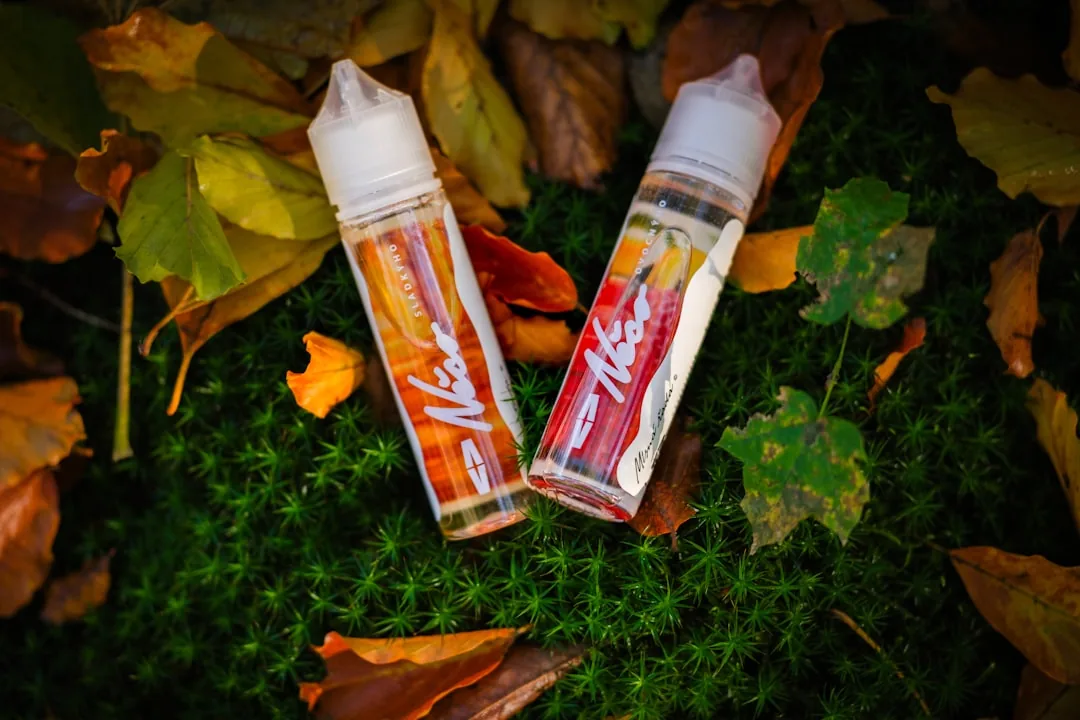
Two bottles carrying the same flavour name can taste like different products. The reason usually sits in two pairs of letters printed small on the label: PG and VG. That pair of molecules carries the aroma, shapes the vapour and decides how the draw feels in the throat.
Most people still buy on the flavour name and never look at the split. Yet the PG VG ratio is the single line on a British label that predicts most of what will happen in the mouth, and it is also the line that tells you whether the bottle suits your device at all.
What the PG VG ratio actually changes
The PG VG ratio is the proportion between propylene glycol and vegetable glycerine, the two base liquids that make up e-liquid before any flavouring or nicotine is added. Both are colourless, and UK retailers describe them consistently: PG thin and neutral, VG thicker and faintly sweet.
PG is fluid, it carries aroma cleanly and sharpens the sensation in the throat that vapers call the hit. VG is viscous, mildly sweet, and produces dense visible vapour.
A PG-heavy split therefore gives a more precise flavour and a firmer hit, while a VG-heavy split generates volume but rounds off and slightly veils the detail. The entire character of a bottle sits on that slider, which is why it is worth reading before the flavour description.
Propylene glycol, the flavour carrier
PG is the least noticeable component in the mouth and the most decisive for taste. Its low viscosity makes it an effective solvent for flavour concentrates.
In practice, a thin liquid soaks into the wick more readily and releases aroma frankly, without weighing it down. That is why flavours built on precision, a sharp citrus, a menthol note, a dry tobacco, benefit from a generous share of PG.
PG also amplifies the throat hit, the small strike at the back of the throat that many vapers look for. The trade-off is straightforward: it produces very little visible vapour, which is exactly why it dominates the small, discreet devices sold in the United Kingdom.
Vegetable glycerine, volume and roundness
VG works on texture rather than definition. Its thickness changes the behaviour of the whole liquid, not just the look of the cloud.
Thick and naturally sweet, glycerine generates voluminous vapour and an enveloping sensation in the mouth. It softens the hit and lends a roundness that flatters sweet profiles in particular.
The drawback is well documented. A VG-dominant liquid can blur the detail of a complex aroma and saturates a coil faster, especially on small hardware. It needs a low resistance coil and enough power to release what it is carrying.
The common ratios on a British shelf
Three splits come round again and again in UK listings, and retailers tie each one explicitly to a coil range rather than to a preference. That connection is the practical part.
- 50/50, the versatile split. It balances flavour fidelity against vapour volume and suits the great majority of compact devices, typically coils in the region of 0.5 to 0.9 ohm.
- 70/30 in favour of PG, oriented towards flavour and hit. Suited to a tight draw and to aromas you want sharp and concentrated.
- 30/70 in favour of VG, oriented towards vapour and softness. Retailers point this at coils of roughly 0.4 ohm and below, on hardware built for it.
Why the format tells you the ratio
This is where the British market makes life easier than it looks. The bottle format is a strong predictor of the split, because the two categories were built for different hardware.
Nicotine-containing e-liquid is sold in 10 ml bottles capped at 20 mg per millilitre, and that is where nic salts live. Those bottles overwhelmingly sit near a balanced base, because they are aimed at pod systems and tight mouth to lung draws.
Shortfills are the other half of the shelf: larger nicotine-free bottles, deliberately underfilled so a flavourless 10 ml nic shot can be added and shaken in. These lean heavily towards glycerine, because they were designed for lower resistance hardware and bigger vapour.
One detail is worth knowing before mixing. A nic shot is itself usually a PG-based liquid, so adding one to a shortfill shifts the final PG VG ratio slightly towards PG and thins the blend a little. Retailers publish shot calculators for the strength maths, but the base shift is rarely mentioned.
Matching the PG VG ratio to the flavour family
This is the point generalist guides skip: the right split depends on which aroma family you are trying to showcase. Each palette makes its own demands.
A bright fruit profile built on citrus or tart berries needs precision, so a more generous share of PG preserves the edge and the freshness of those notes, as our tour of the fruit families sets out. A sweet blend of vanilla and caramel handles a stronger VG presence comfortably, since the extra body extends the sweetness rather than betraying it.
Menthol notes stay readable almost anywhere, but gain a cutting freshness with PG. Choosing a ratio is therefore as much a question of hardware as of the taste you are chasing, and getting it wrong is one of the quieter causes of a flavour that seems to fade for no reason, alongside vaper’s tongue.
Matching the ratio to the hardware
The last link is technical, and it overrides preference. A ratio only makes sense if it matches the device that will vaporise it.
A coil above 1 ohm with a tight draw pairs with a PG-rich liquid: little vapour, but a dense flavour and a firm hit. A low resistance coil on a more powerful device calls for a VG-dominant liquid capable of feeding that heat without a dry note creeping in.
Putting a very thick liquid into a small pod usually ends in a burnt taste, because the wick is not fed quickly enough. The agreement between liquid and hardware outranks any theoretical preference about which split is better.
Frequently asked questions
Which ratio should a beginner choose?
A 50/50 split remains the safest starting point. It works on almost every compact device, carries flavour properly and produces measured vapour. You refine afterwards, towards PG for flavour or VG for volume.
Does a high PG level sting the throat more?
Yes. Propylene glycol accentuates the throat hit. Anyone finding it too firm can move towards VG, which is softer, or reconsider the nicotine strength and format they are using.
Can I change the ratio of a bottle myself?
For a ready-to-vape bottle, the split is fixed at the factory and printed on the label. Adjusting it belongs to home mixing from separate bases and concentrates. Adding a nic shot to a shortfill shifts it only marginally.
Why does my liquid clog the coil so quickly?
A high glycerine content, being thicker and sweeter, leaves more residue on the wick and the coil. On a VG-rich liquid, coils are generally replaced more often than on a balanced 50/50 base.
Does the ratio affect how much liquid I get through?
Indirectly. A VG-rich liquid is used on powerful hardware that vaporises a lot, so the bottle empties faster. A PG-rich liquid on a tight draw lasts noticeably longer for the same usage.
Read the label before you read the flavour
Checking the PG VG ratio before the aroma is how you understand why the same flavour name can delight in one bottle and disappoint in another. That proportion decides the clarity of the taste, the density of the vapour and the firmness of the hit, in permanent conversation with the coil fitted to your device.
On a British shelf the shortcut is simple: a 10 ml bottle usually means a balanced base and a tight draw, a shortfill usually means glycerine and a lower resistance coil. Get that pairing right and you stop choosing at random, which is the beginning of composing a palette on purpose rather than by accident.
Editorial content for adult readers only. Vaping products usually contain nicotine, a substance that causes addiction. Not for sale to under-18s in the United Kingdom. This article is not a buying recommendation.